While many of these tasks are necessary, they do not always require human involvement. In fact, relying on manual work for repetitive processes often leads to errors, delays, and missed opportunities.
This is why more businesses are turning to automation. By automating routine tasks, companies can save time, improve efficiency, and focus on activities that drive growth.
In this article, we explore 10 tasks you should automate in your business today to improve productivity and scale more efficiently.
1. Lead Capture and Assignment
When a potential customer shows interest in your business, it is important to respond quickly. However, manually collecting and assigning leads can slow down the process.
Automation allows you to capture leads from your website, forms, or ads and automatically assign them to the right team member.
2. Follow-Up Messages
Many deals are lost simply because businesses fail to follow up on time. Automated follow-up messages ensure that no lead is forgotten.
You can set up sequences that send emails or notifications based on specific actions or time intervals.
3. Task Assignment
Assigning tasks manually can create confusion and delays. Automation ensures that tasks are assigned instantly based on predefined rules.
For example, when a deal reaches a certain stage, the system can automatically assign the next task to the appropriate team member.
4. Customer Onboarding
Onboarding new customers often involves multiple steps, such as sending welcome emails, sharing documents, and setting up accounts.
Automating this process ensures consistency and improves the customer experience.
5. Invoice Generation
Creating invoices manually can be time-consuming and prone to errors. Automation allows you to generate invoices automatically when a deal is closed.
This reduces administrative work and ensures that billing is handled promptly.
6. Email Marketing Campaigns
Marketing campaigns often involve repetitive actions such as sending newsletters or promotional messages.
Automation tools allow you to schedule and trigger campaigns based on customer behavior, improving engagement and conversion rates.
7. Data Entry and Updates
Manual data entry is one of the most time-consuming tasks in any business. It also increases the risk of errors.
Automating data capture and updates ensures that information is accurate and always up to date.
8. Customer Support Responses
Many customer inquiries are repetitive and can be handled with automated responses.
Automation helps businesses respond faster and maintain consistent communication with customers.
9. Reporting and Analytics
Generating reports manually takes time and effort. Automation allows businesses to create real-time reports without manual input.
This provides better visibility into performance and helps managers make informed decisions.
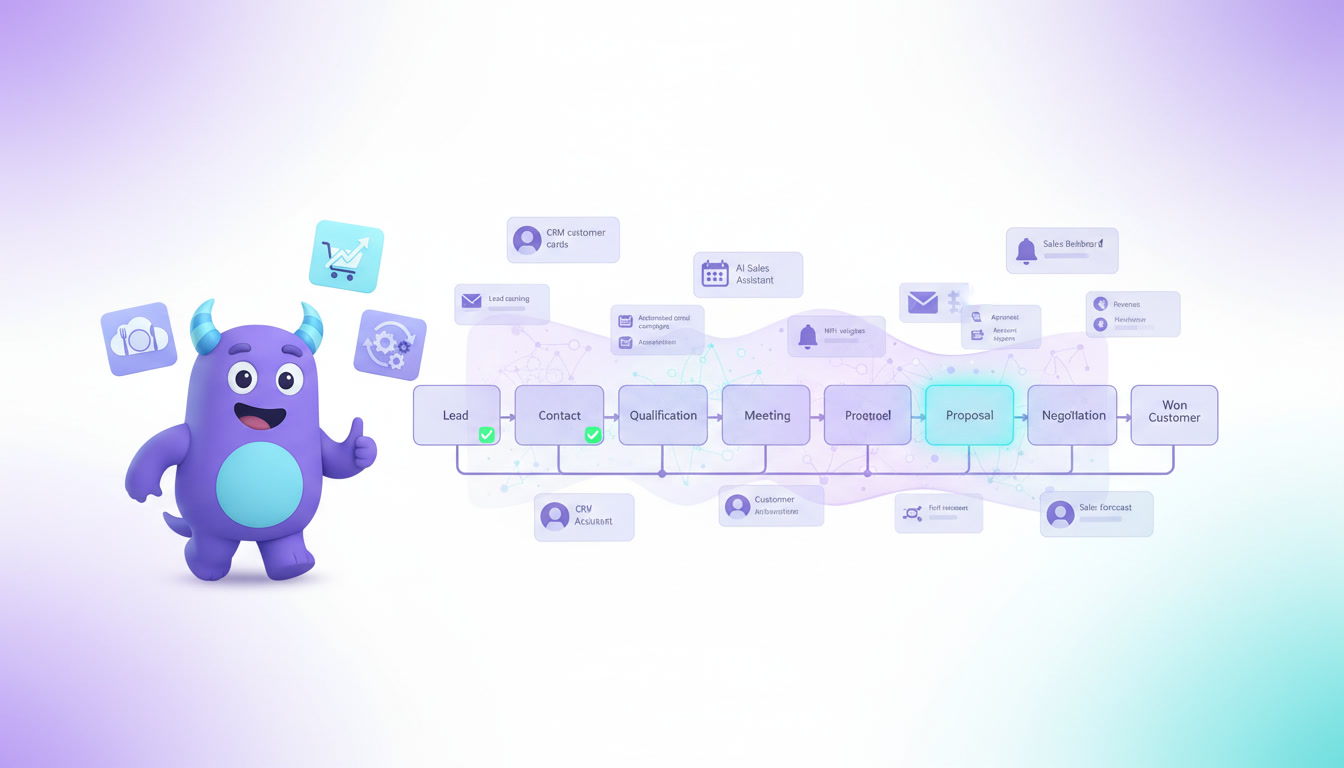
10. Workflow Management
Managing workflows manually can lead to confusion and missed steps. Automation ensures that processes move forward smoothly.
Each stage of a workflow can trigger the next action, creating a seamless flow of operations.
How CRM Systems Help Automate Your Business
CRM systems are one of the most powerful tools for automation. They allow businesses to centralize data, manage workflows, and automate key processes.
With a CRM, you can automate lead management, communication, task assignments, and reporting in one place.
Platforms like Lua CRM are designed to help businesses simplify operations and build scalable systems through automation.
By using CRM automation, companies can reduce manual work and operate more efficiently.
Conclusion
Automation is no longer optional for businesses that want to grow and stay competitive. By automating repetitive tasks, companies can save time, reduce errors, and improve productivity.
The key is to identify tasks that do not require human involvement and replace them with automated processes.
With the right tools and systems in place, businesses can focus on what truly matters — growth, strategy, and customer relationships.
.jpg)

.jpg)