Home service businesses rely on speed, coordination, and reliability. Dispatching technicians, managing schedules, communicating with customers, handling invoices, and tracking materials must all work together seamlessly. When a company is small, these tasks are often managed with phone calls, notebooks, spreadsheets, and simple scheduling tools.
As demand grows, however, this informal setup begins to crack. More customers mean more service calls, more routes, more technicians, and more follow-ups. What once felt flexible becomes slow, reactive, and difficult to control. Teams stay busy, yet jobs take longer to complete and customer complaints become more frequent.
The slowdown is rarely caused by lack of effort. It happens when operations become too complex for the systems supporting them.
Growth Adds Pressure to Every Daily Process
Each additional service request multiplies coordination work. Appointments must be booked, technicians assigned, parts prepared, routes planned, and customers updated. When these steps are handled across disconnected tools, small changes create large disruptions.
A late technician, missing part, or scheduling change triggers a chain reaction of phone calls and rescheduling. Office staff scramble to reorganize the day while field teams wait for instructions. Productivity drops, even though everyone is working hard.
Without structured workflows, growth automatically increases friction.
Manual Dispatching Becomes a Bottleneck
Dispatching is at the heart of home service operations. Coordinating where technicians go, when they arrive, and what equipment they need requires constant updates. In growing businesses, dispatchers rely heavily on experience and memory.
As volume increases, this manual approach becomes risky. Double bookings occur. Travel time is underestimated. Urgent jobs interrupt planned routes. Customers receive conflicting arrival windows.
Over time, dispatching inefficiencies slow the entire operation and damage customer trust.
Fragmented Systems Reduce Visibility
Many home service companies use separate tools for scheduling, invoicing, inventory, customer communication, and reporting. Each platform holds part of the story, but none provide a complete operational view.
Managers struggle to see technician utilization, job profitability, or daily capacity in real time. Understanding which services generate the most margin or where delays occur requires manual analysis.
Without visibility, decisions about hiring, pricing, or expansion become guesswork.
Administrative Work Grows Faster Than Revenue
As operations scale, office teams face increasing workloads. Quotes, invoices, follow-ups, warranty claims, and documentation require constant attention. When these processes remain manual, administrative costs rise faster than revenue.
Technicians may need to complete paperwork after hours. Office staff stay late reconciling schedules and payments. Stress increases across the organization, and turnover becomes more likely.
Operational inefficiency quietly erodes profitability.
Centralized Systems Support Scalable Field Operations
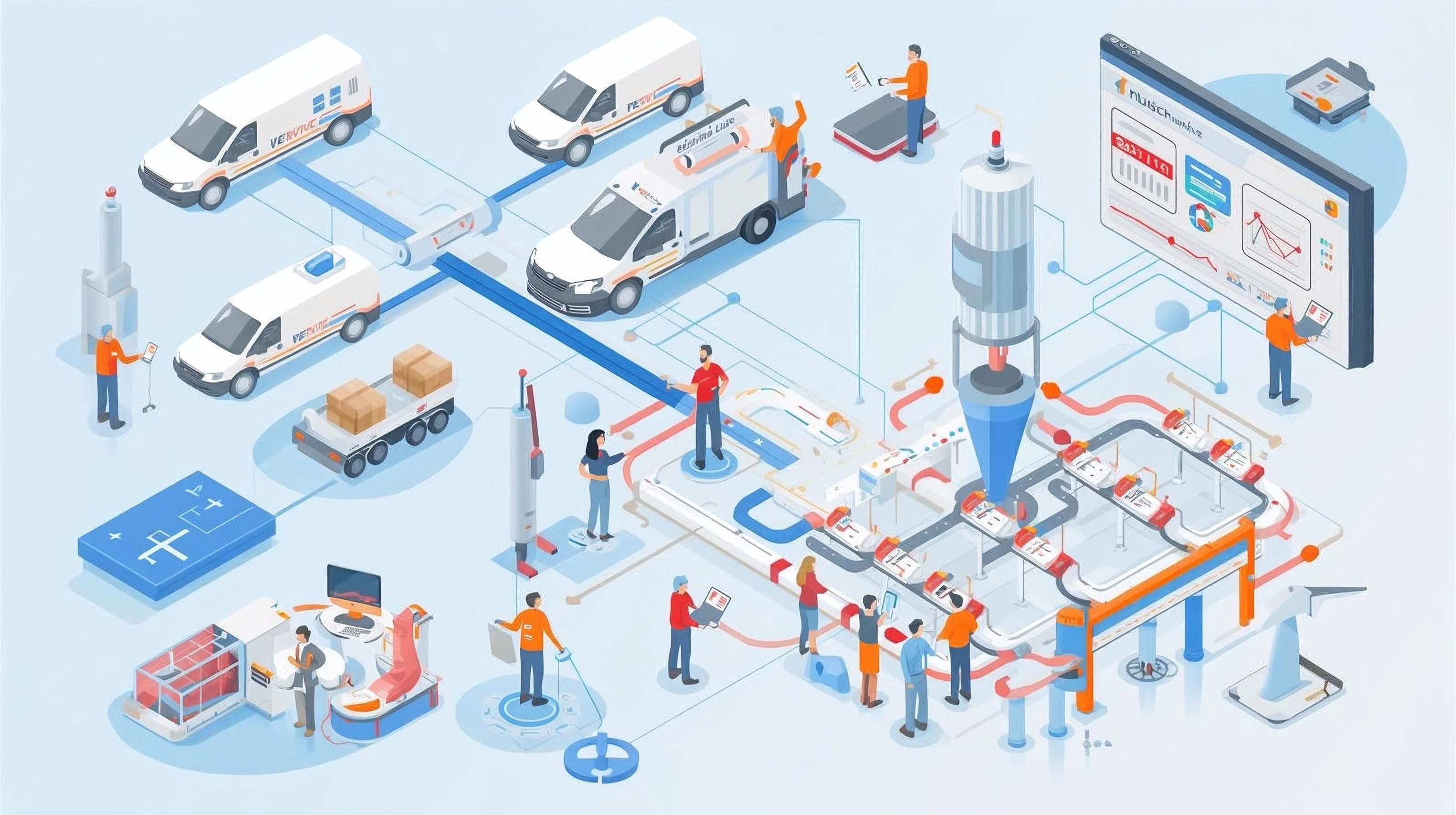
To scale effectively, home service businesses need centralized operational systems. Scheduling, dispatching, customer records, job status, inventory, and billing must live in one connected environment.
A unified system ensures that updates flow instantly between office staff and field teams. Routes adjust automatically. Tasks are assigned clearly. Managers see performance in real time instead of after problems occur.
With structured operations, growth becomes predictable rather than chaotic.
Conclusion
Home service businesses slow down as they scale because manual processes and disconnected tools cannot support increasing volume and complexity. Growth exposes weaknesses in dispatching, visibility, and administrative structure.
Companies that invest in structured operational systems early can expand service areas, serve more customers, and protect service quality. Those that delay often face rising costs, overwhelmed teams, and frustrated customers.
Sustainable growth in home services depends on turning daily coordination into a structured, visible, and scalable operation.