Many businesses struggle not because they lack customers, but because they lack structure. In the early stages, founders and small teams can manage everything manually. But as the business grows, this approach quickly becomes unsustainable.
Tasks get missed, communication breaks down, and operations become chaotic. This is where business systems become essential.
Building systems allows businesses to scale efficiently without losing control. Instead of relying on individuals to manage everything, systems create a structured way of working that ensures consistency and growth.
What Are Business Systems?
Business systems are structured processes that define how work is done within a company. They include workflows, rules, and tools that guide tasks from start to finish.
A system ensures that tasks are completed in a consistent way, regardless of who is responsible. This reduces errors, improves efficiency, and makes it easier to scale operations.
Why Systems Are Essential for Scaling
Scaling a business means handling more customers, more tasks, and more complexity. Without systems, this growth leads to chaos.
Systems allow businesses to manage increased workload without increasing stress or losing quality. They create stability, improve productivity, and make it easier to train new employees.
In short, systems turn growth into something manageable.
Step 1: Identify Your Core Processes
Start by identifying the most important processes in your business. These usually include lead management, sales, customer onboarding, support, and internal operations.
Understanding these processes is the foundation of building systems.
Step 2: Break Down Each Process
Once you identify your core processes, break them down into clear steps. Document what needs to happen, who is responsible, and what the expected outcome is.
This helps eliminate confusion and ensures everyone follows the same structure.
Step 3: Standardize Your Workflows
Standardization is key to consistency. Define clear rules and steps for each process so that tasks are performed the same way every time.
This reduces errors and improves efficiency across your team.
Step 4: Introduce Automation
Once your processes are clear, you can start automating repetitive tasks. Automation helps reduce manual work and ensures that processes run smoothly.
For example, follow-ups, task assignments, and notifications can all be automated.
This allows your team to focus on high-value activities instead of routine tasks.
Step 5: Use the Right Tools
Systems need tools to function effectively. Without the right tools, even well-defined processes can break.
CRM systems play a key role in managing business processes. They centralize data, track workflows, and ensure that tasks are executed properly.
Instead of relying on spreadsheets or scattered tools, a CRM provides a structured environment for managing operations.
How Lua CRM Helps You Build Scalable Systems
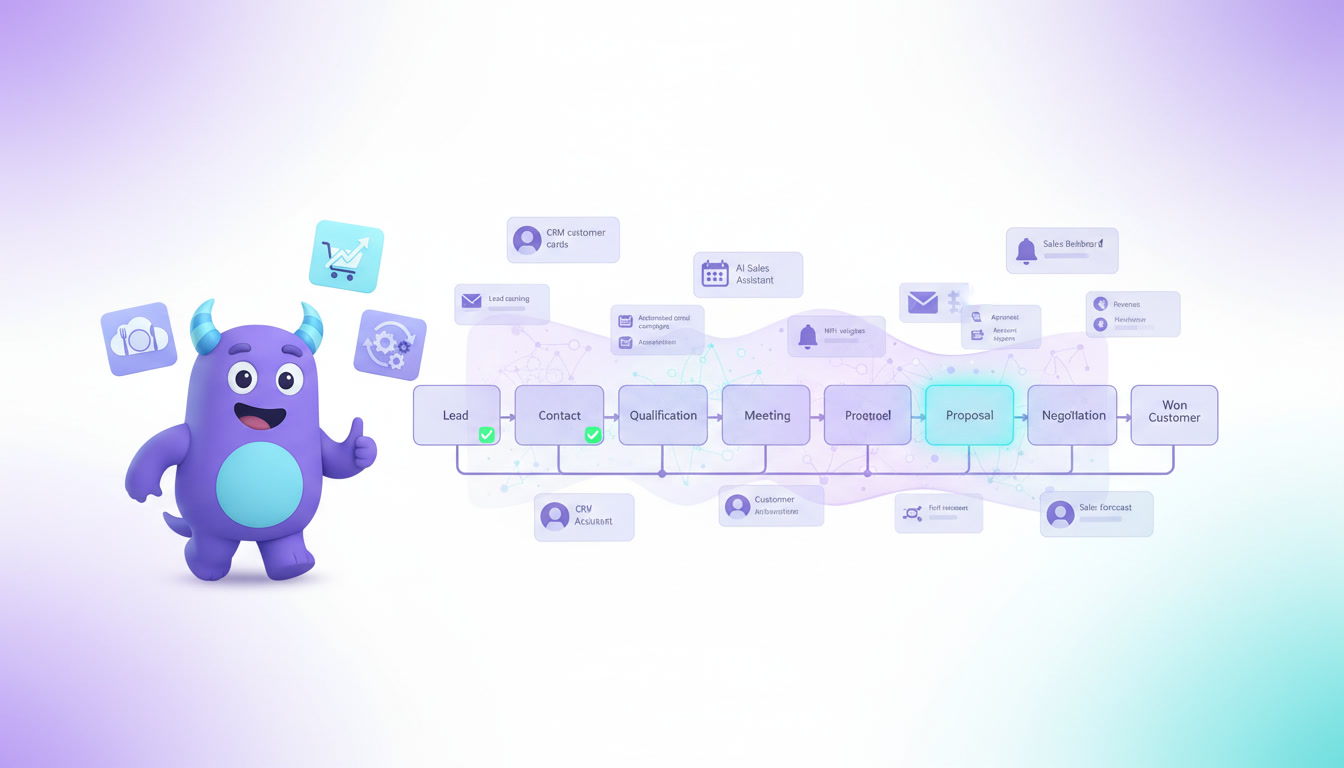
Lua CRM is designed to help businesses build and manage systems that scale. The platform allows you to create workflows, automate tasks, and organize customer data in one place.
With Lua CRM, you can track leads, manage sales pipelines, assign tasks automatically, and monitor performance.
This creates a structured system that supports growth without adding complexity.
By combining automation with CRM functionality, businesses can operate more efficiently and scale with confidence.
Common Mistakes to Avoid
Many businesses make the mistake of overcomplicating their systems. Complex processes can slow down operations instead of improving them.
Another common mistake is not documenting workflows. Without clear documentation, systems rely on memory, which leads to inconsistency.
It is also important to continuously improve your systems as your business grows.
Conclusion
Building business systems is one of the most important steps for scaling successfully. Without systems, growth leads to chaos.
By identifying key processes, standardizing workflows, and using automation tools like CRM systems, businesses can create a strong foundation for growth.
In the long run, systems allow companies to scale efficiently, maintain quality, and operate with control.
The goal is simple: create systems that allow your business to grow without breaking.
.jpg)

.jpg)